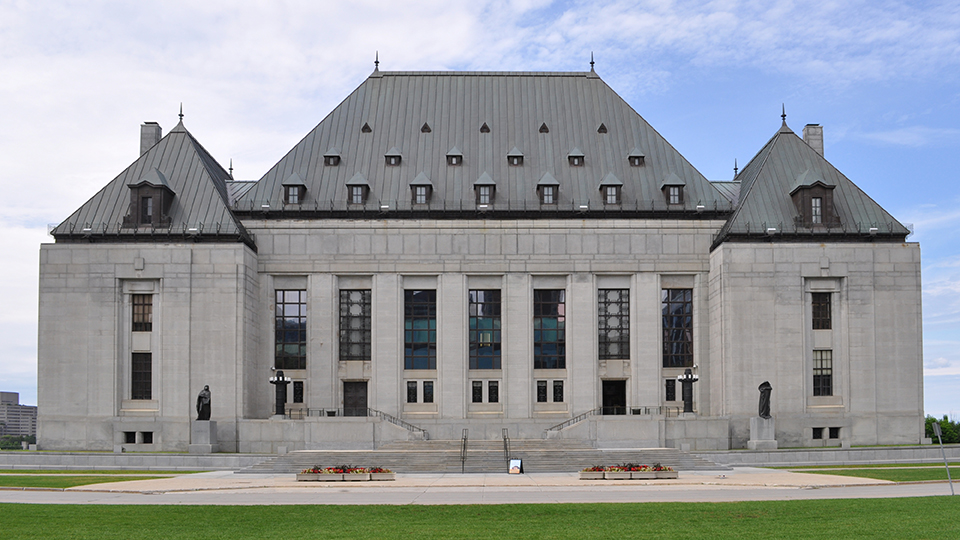
The Supreme Court of Canada has recognized a new tort of intimate partner violence in a landmark ruling that could reshape how survivors pursue justice in Canadian courts.
In Ahluwalia v. Ahluwalia, 2026 SCC 16, the Court ruled 6–3 in favour of recognizing intimate partner violence as its own legal wrong — one that goes beyond isolated incidents and acknowledges the cumulative harm caused by coercive and abusive relationships.
“This decision recognizes something survivors have been telling us for years — that abuse in a relationship is rarely just one incident,” says Aman Kahlon, a lawyer at Clark Woods LLP. “It’s a pattern that wears a person down over time, and it leaves harm that doesn’t always show on the surface. Ahluwalia gives survivors a way to bring their full experience into a courtroom, and to be heard.”
What the Case Was About
Kuldeep Ahluwalia married Amrit Ahluwalia in India in 1999. They moved to Canada in the early 2000s and had two children.
Over 16 years of marriage, Ms. Ahluwalia was subjected to physical assaults, threats, isolation from her family, financial control, and a sustained pattern of conduct designed, in the Court’s words, to break her will and condition her to obey.
When the couple separated, Ms. Ahluwalia eventually brought a claim for damages as part of her family law proceedings — and for much of the litigation, she represented herself.
The trial judge awarded her $150,000 and recognized a new tort of “family violence.” The Ontario Court of Appeal disagreed, finding existing torts sufficient, and reduced her damages to $100,000.
The Supreme Court has now substantially restored the trial judge’s approach, under a more carefully defined tort.
“It matters that this case was driven by a self-represented woman who refused to let the law shrink her experience,” Aman says. “That tells you everything about why this decision was needed.”
Why Existing Law Wasn’t Enoug
The heart of the majority’s reasoning is that existing torts can’t capture what intimate partner violence actually is.
Assault, battery, and intentional infliction of emotional distress are built around discrete incidents. They ask: did this specific punch land? Was this threat serious enough? Did this act cause psychiatric injury?
But abuse in an intimate relationship rarely lives in single moments. Its harm is cumulative, relational, and patterned — a campaign of conduct that, over time, erodes a person’s autonomy, dignity, and equality.
Justice Kasirer wrote that existing torts fail to “remedy the specific wrong to dignity, autonomy and equality that intimate partner violence creates.”
Survivors who had to fit their experience into the older framework, he held, were left with an incomplete remedy.
Intimate Partner Violence Cases: What You Need to Prove
To bring a claim under the new tort, a plaintiff must show:
- The conduct happened during an intimate partnership or after it ended
- The defendant intentionally engaged in abusive conduct
- The conduct, viewed objectively, amounted to coercive control
Importantly, you do not have to separately prove a specific harm or injury. Once those three elements are made out, the harm is presumed and damages follow.
As the Court recognized, the harm lives in the conduct itself.
Conduct that can amount to intimate partner violence includes — but is not limited to — physical and sexual violence, psychological abuse, humiliation, isolation from family and friends, surveillance, financial control, sexual coercion, intimidation, and manipulation.
The Court was also clear that a single incident can be enough in some cases; a long pattern is not always required.
Why This Decision Is About Access to Justice
Read the commentary from the intervenors and the legal community today and one theme keeps surfacing: access to justice.
Organizations like the Women’s Legal Education and Action Fund (LEAF), which intervened in the case, argued that requiring survivors to stitch together multiple existing torts created real barriers — barriers that fell hardest on the people who most needed the courts.
The majority explicitly accepted that argument.
The decision is grounded in a feminist and intersectional understanding of intimate partner violence, recognizing that women are disproportionately harmed and that experiences of abuse are shaped by factors like culture, immigration status, and community expectations.
That recognition matters to us at Clark Woods LLP.
Many of the survivors we work with are navigating not just the abuse itself, but the cultural, familial, and community pressures that made it harder to speak up or leave.
The Court has acknowledged what survivors have long known: the pressure to stay silent is part of the harm.
“The decision opens a door, but walking through it can still feel impossible,” Aman says. “That’s where having the right legal team matters — people who understand both the law and the lived reality of what you’ve been through.”
How Clark Woods LLP Can Help
Our family law team has experience working with survivors of intimate partner violence.
We understand that these matters rarely stand alone — they sit alongside custody, support, property division, and sometimes parallel criminal proceedings — and we are equipped to handle the full picture with the care it deserves.
We also understand the realities that make reaching out hard.
Many of the people we work with come from communities where divorce, abuse, and family conflict carry layered stigma, and we approach every conversation with that in mind.
We move at your pace, we are mindful of safety and confidentiality from the very first contact, and we do not ask you to relive more than you are ready to share.
“My goal in a first conversation is simple,” Aman says. “I want you to leave knowing more than when you arrived, and feeling less alone. Whether you decide to take legal action now, later, or never, that conversation belongs to you.”
A Note If You’re Reading This and Seeing Yourself
You do not need a perfect record of what happened.
You do not need to have left already.
You do not need to have called the police, or told your family, or made up your mind about anything.
What you need is information, and a place where you can speak freely.
We can be that place.
Get In Touch Today
If you would like to talk to someone at Clark Woods LLP about your situation — or simply to understand what the Ahluwalia decision might mean for you — please reach out. The first call is confidential and free. We will listen, and we will help you understand your options.
This post is for general information only and is not legal advice. If you are in immediate danger, please call 911. For 24/7 support, contact VictimLink BC at 1-800-563-0808.